
ITCHY FEET: CAUSES, SYMPTOMS & RELIEF
Itchy feet can be a frustrating and uncomfortable experience. Whether it’s a mild annoyance or a persistent issue, understanding the causes can help you find relief. From skin conditions like psoriasis and eczema to fungal infections and even pregnancy-related changes, there are many reasons why your feet might itch. This article will explore the common causes, symptoms, and practical ways to soothe itchy feet, including when to seek professional medical advice.
WHY ARE MY FEET ITCHY?
Itchy feet can stem from a variety of causes, ranging from skin conditions to environmental factors. Below, we’ll delve into some of the most common reasons behind this discomfort, helping you identify potential triggers.
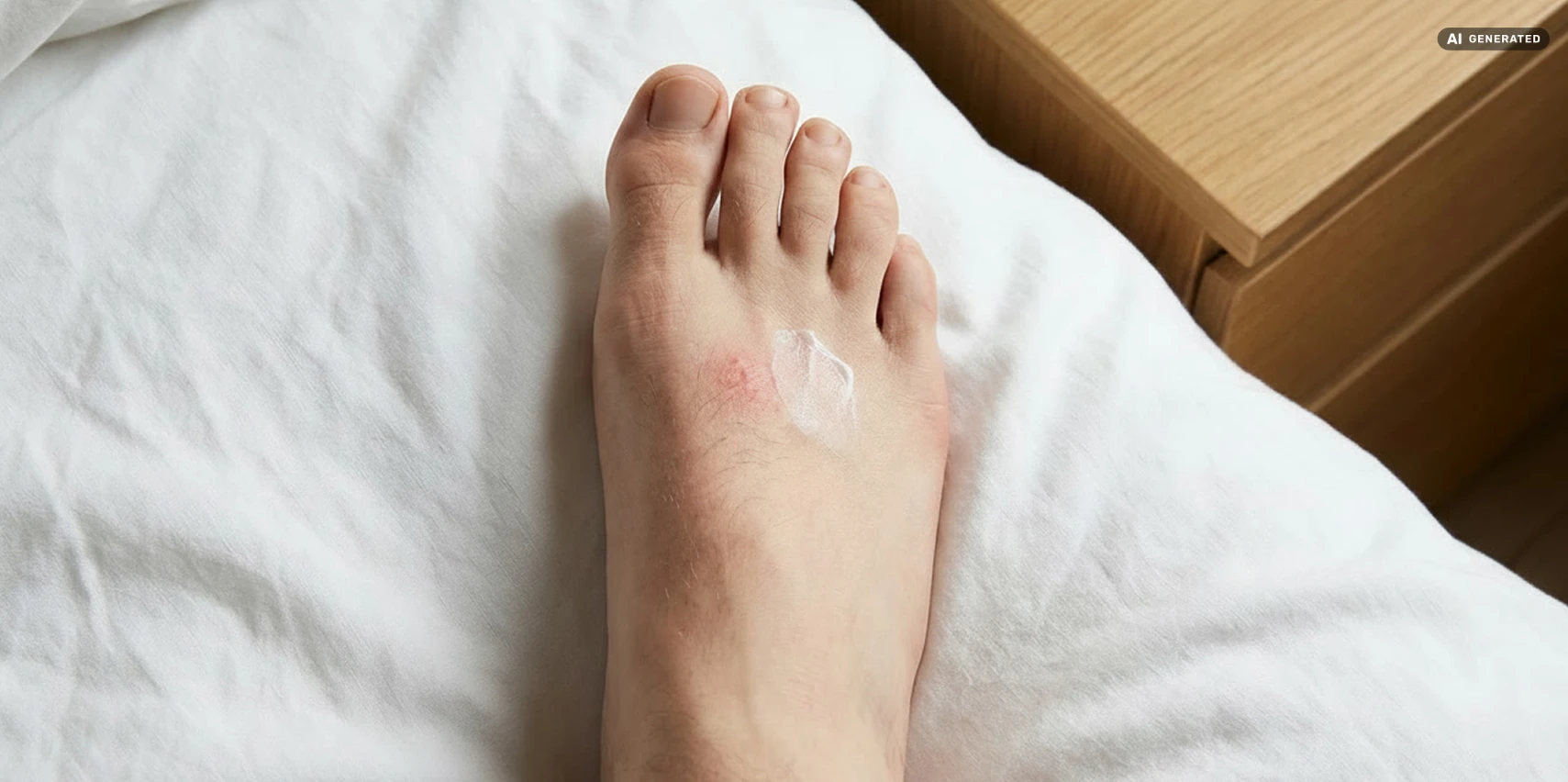
ECZEMA ON THE FEET
Pompholyx, also known as dyshidrotic eczema, is a specific type of eczema that commonly manifests on the hands and feet. This condition causes intensely itchy, fluid-filled blisters that can last for two to three weeks before they start to heal.
Symptoms of eczema on the feet include:

Burning or prickling sensations before blisters appear
Itchy, fluid-filled blisters that may leak
Dry, cracked, and sore skin after blisters heal 1
PSORIASIS ON THE FEET
Psoriasis is a chronic skin condition, when it affects the feet it is known as palmoplantar psoriasis. This condition impacts 12–16% of people living with psoriasis and can significantly affect mobility and daily activities
Symptoms of psoriasis on the feet include:
Discolored, dry, and thickened skin
Painful cracks (fissures) on the soles
Small, fluid-filled pustules that may change color
Nail abnormalities like discoloration and thickening 2
DRY FEET
Dry skin is a common condition that can cause itching and irritation. It frequently develops as a natural part of the aging process, but can also be linked to certain medical conditions or triggered by environmental factors like dry weather.
Symptoms of dry feet include:
Rough, tight skin
Itching and cracking, especially around the heels
Increased irritation in hot weather 3
CHILBLAINS
Chilblains develop on the skin after exposure to cold, damp air. Chillblains on the toes are common, causing itchy and swollen areas. Although symptoms typically resolve on their own within two to three weeks, they have a tendency to reappear with subsequent exposure to cold weather.
Symptoms of chilblains include:
ITCHY FEET SYMPTOMS
The symptoms of itchy feet can vary widely depending on the underlying cause. While some may experience a mild, occasional itch, others may have more persistent and uncomfortable sensations. Common signs to look for include:
Red spots on feet: Often linked to conditions like eczema or psoriasis
Blisters on feet: Seen in athlete’s foot or pompholyx eczema
Dry, cracked skin on feet: Common with dry feet or psoriasis
Stinging sensations on feet: Associated with chilblains or fungal infections
WHAT ARE THE ITCHY RED BLISTERS ON MY FEET?
Small itchy blisters on your feet can be a sign of several conditions, including eczema, psoriasis, or athlete’s foot. The specific appearance and behavior of these blisters can vary, but they often become more pronounced or irritated after exposure to certain triggers. For instance, heat and moisture can significantly worsen the itching and inflammation, which is why you might notice your symptoms flare up during or immediately after taking a hot shower.5
WHY DO MY FEET ITCH AT NIGHT?
Itchy feet flare ups at night can be common. This may be due to a combination of natural bodily changes and environmental factors. Potential causes include:
Natural Circadian Rhythm: Your body’s internal clock influences skin temperature, blood flow, and hormone levels.
Moisture Loss: Your skin loses more water at night, which can lead to dryness and itching.
Environmental Factors: Dry indoor air, particularly in winter, can strip your skin of moisture, causing it to itch.
Fewer Distractions: With fewer distractions at night, you may be more aware of the itching sensation, making it feel more intense.6
Knowing how to relieve itchy feet at night depends on the underlying condition. It’s always best to speak to a doctor to determine the most appropriate treatment.
ITCHY FEET TREATMENT
To find effective relief from itchy feet, it's important to address both the immediate itching sensation and the underlying cause of the irritation. Here are some proven treatment options to help you manage and relieve itchy feet:
IMMEDIATE ITCH RELIEF
For quick relief, Cortizone-10® products can help soothe itchy skin associated with minor irritations, inflammation, and rashes due eczema and psoriasis. These over-the-counter creams contain 1% hydrocortisone, the maximum-strength anti-itch medicine available without a prescription. Cortizone-10® products are also formulated with additional ingredients like aloe and essential oils for enhanced moisture and skin benefits. Read the complete label prior to use to determine which product is right for you. Use as directed.
HOW TO STOP THE ITCH WITH HOME REMEDIES
Simple home remedies can effectively complement medical treatments and help improve your recovery from itchy feet:
Wear breathable socks: Choose socks made from materials like cotton that allow moisture to escape, preventing the damp environment where fungus can thrive.
Keep your feet clean and dry: Thoroughly dry your feet after bathing or swimming, paying special attention to the spaces between your toes.
Moisturize your skin regularly: Applying a quality moisturizer can help prevent dryness and cracking, which can lead to itching.
Choose well-ventilated shoes: Opt for shoes that allow air to circulate freely, reducing sweat buildup and keeping your feet cool and dry.
Wash between your toes daily: Good hygiene is crucial. Make sure to clean the often-overlooked areas between your toes every day to remove bacteria and potential irritants.
WHEN TO SEE A DOCTOR
If your symptoms of itchy feet persist or worsen despite trying at-home remedies, it is advisable to consult a healthcare provider. Seek medical attention if any of the following apply to you:
You are worried about your itchy feet
You have diabetes or are pregnant with severe itching
You experience long-lasting or recurring symptoms
You have painful blisters that are leaking pus, or crusted over
FAQS ABOUT ITCHY FEET
WHAT ARE THE RED ITCHY BUMPS ON YOUR FEET?
Red itchy bumps or blisters on your feet can be a sign of several conditions, including eczema, psoriasis, or athlete’s foot.5
WHY ARE MY FEET ITCHY AFTER A SHOWER?
You might notice itchy feet symptoms flare up during or after a hot shower, as heat and moisture can significantly worsen itching and inflammation.5
WHAT DOES ITCHY FEET MEAN?
Itchy feet have a wide range of causes, from specific skin conditions to environmental factors. If you’re experiencing itchy feet and feel worried, talk to your doctor to find the root cause and a suitable treatment option.
IS ITCHY FEET A SIGN OF DIABETES?
Itchy feet can be a sign of diabetes. Uncontrolled diabetes can negatively impact skin health, potentially leading to conditions such as eruptive xanthomatosis. This condition is characterized by the appearance of small, itchy bumps on the skin.7
WHAT’S GOOD FOR ITCHY FEET?
Cortizone-10® products help to alleviate symptoms of itching due to minor irritations, inflammation, and rashes due to certain conditions including eczema, psoriasis, and insect bites. It’s also important to practice good foot hygiene like cleaning regularly and wearing breathable socks. Always talk to a doctor to understand the root cause of your itchy feet and find the correct treatment options.
DOES ITCHY FEET MEAN LIVER FAILURE?
Itching, particularly on the palms of the hands and the soles of the feet, can be a symptom of certain liver diseases. This sensation of itchiness may become more intense or noticeable in warm conditions or during the night.8 Always consult a doctor to determine the underlying cause of your itchy feet and explore appropriate treatment options.
WHAT IS ATHLETES FOOT?
Athlete’s foot, or tinea pedis, is a common fungal skin infection. The fungus responsible thrives in warm, moist environments like sweaty socks and damp public areas.4
Note: Use all products only as directed. Cortizone 10 is indicated for temporary relief of itching associated with minor skin irritations, inflammation, and rashes due to eczema, psoriasis, poison ivy, oak, sumac, insect bites, detergents, jewelry, cosmetics, soaps, seborrheic dermatitis. For questions about your specific situation, talk to your healthcare provider for further advice.
SOURCES:
- National Health Service (UK). Pompholyx (dyshidrotic eczema). NHS [Internet]. 2025 Jul 30 [cited 2026 Mar 23]. Available from: https://www.nhs.uk/conditions/pompholyx
- National Psoriasis Foundation. Psoriasis on feet: Symptoms, causes & treatment. Psoriasis.org [Internet]. [cited 2026 Mar 23]. Available from: https://www.psoriasis.org/psoriasis-on-feet/#symptoms
- East Sussex Healthcare NHS Trust. Pet and mold allergies. ESHT [Internet]. 2022 Oct [cited 2026 Mar 23]. Available from: https://www.esht.nhs.uk/wp-content/uploads/2022/10/1020.pdf
- Mayo Clinic. Chilblains. Mayo Clinic [Internet]. 2024 Oct 23 [cited 2026 Mar 23]. Available from: https://www.mayoclinic.org/diseases-conditions/chilblains/symptoms-causes/syc-20351097
- Cleveland Clinic. Dyshidrotic eczema (dyshidrosis): Symptoms, causes & treatment. Cleveland Clinic [Internet]. 2025 Jul 16 [cited 2026 Mar 23]. Available from: https://my.clevelandclinic.org/health/diseases/17728-dyshidrotic-eczema
- Cleveland Clinic. Itchy skin at night (nocturnal pruritus): causes & treatment. Cleveland Clinic [Internet]. 2023 Jun 20 [cited 2026 Mar 23]. Available from: https://my.clevelandclinic.org/health/diseases/24338-itchy-skin-at-night
- American Academy of Dermatology Association. Diabetes warning signs: Look at your skin. AAD [Internet]. [cited 2026 Mar 23]. Available from: https://www.aad.org/public/diseases/a-z/diabetes-warning-signs
- Liver Foundation (Australia). Itching (pruritus) and liver disease. Liver Foundation [Internet]. [cited 2026 Mar 23]. Available from: https://liver.org.au/your-liver/symptoms/itching

